


Rising energy demand and escalating costs are pushing utility companies to their limits. For many, the challenge isn’t just meeting power distribution needs; it’s managing those needs affordably and efficiently while maintaining reliability for the communities they serve.
When demand peaks, so do costs. Utilities are often charged based on their highest levels of electricity usage from the grid, even if those spikes last only minutes. Over time, those short-lived surges can lead to significant increases in annual operating expenses and strain already tight budgets.
So how can utilities control costs without compromising service reliability or long-term sustainability? The answer lies in peak shaving, a strategic approach that transforms how utilities manage power.
A Smarter Way to Manage Energy Demand
Peak shaving is a simple yet powerful concept: reduce electricity drawn from the grid during the most expensive demand periods by supplementing power through alternative sources or shifting loads strategically.
With today’s technology, utilities can use a combination of non-wire alternatives:
- On-site generation - such as natural gas, renewable, or biogas systems
- Battery Energy Storage Systems (BESS) - to capture and discharge power when needed most
- Automated load management - to control consumption in real time
- Microgrid integration - for flexible, self-sustaining operation
These systems work together to minimize reliance on grid power during high-cost windows, keeping energy expenses predictable and manageable while maintaining uninterrupted service.
Peak Shaving in Action: The Value It Delivers
When properly implemented, peak shaving provides measurable operational and financial benefits:
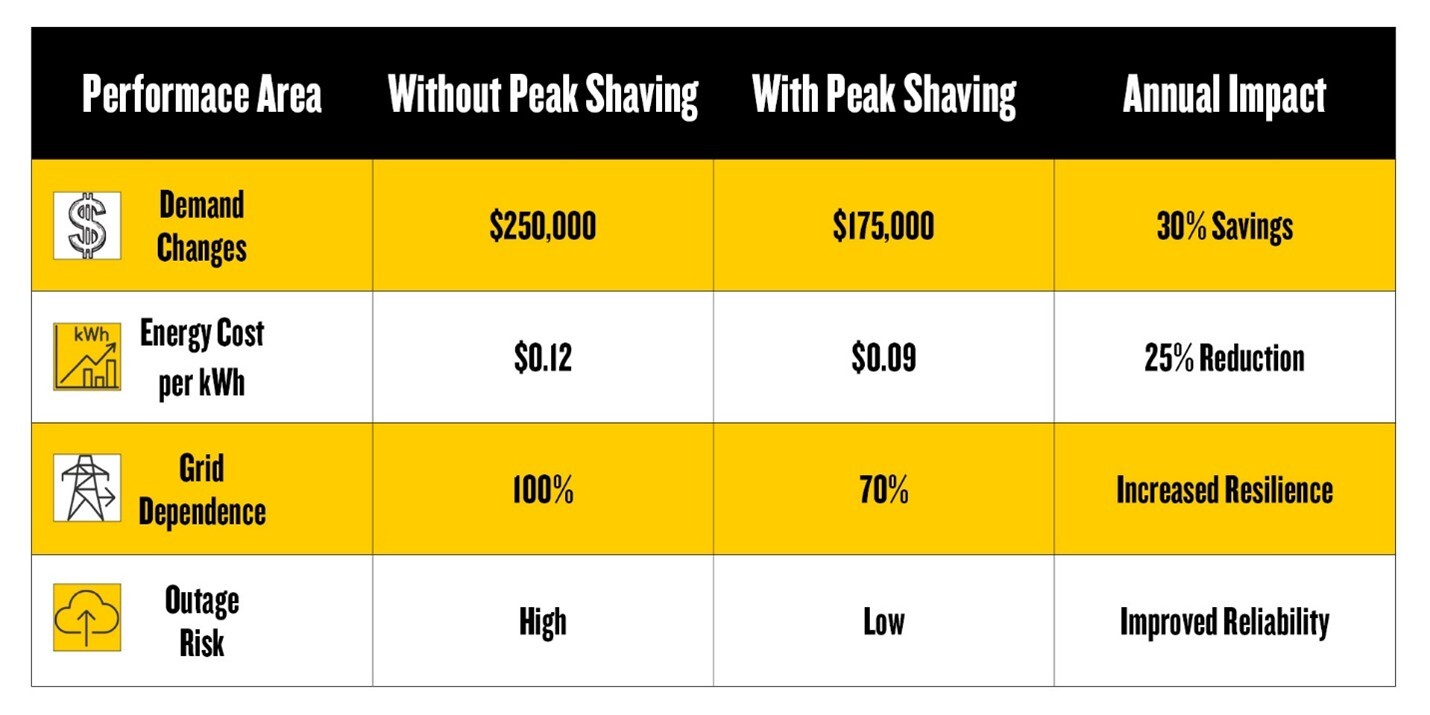
The example in this table is based on a mid-sized municipal utility operating at 5 MW peak demand. It uses the following sources to calculate the impact on a 5 MW peak system:
- $250k vs $175k: Based on the Network Integration Transmission Service (NITS) rates for transmission access in the geographic area of PJM Interconnection, a regional transmission organization.
- $0.12 vs $0.09: Based on the Locational Marginal Pricing (LMP) spread between peak and off-peak hours on the wholesale market.
- 100% to 70%: Based on the N+1 redundancy and asset allocation models used in Cat microgrid designs.
Actual results will vary by region and energy rate structure.
By shaving peak load, utilities not only reduce costs but also support grid stability, easing the burden on regional infrastructure and helping prevent outages during extreme weather or demand surges.
Powering Reliable, Sustainable Energy
At Cleveland Brothers, our team works alongside energy leaders to create and implement peak shaving solutions tailored to each utility’s and community’s unique needs.
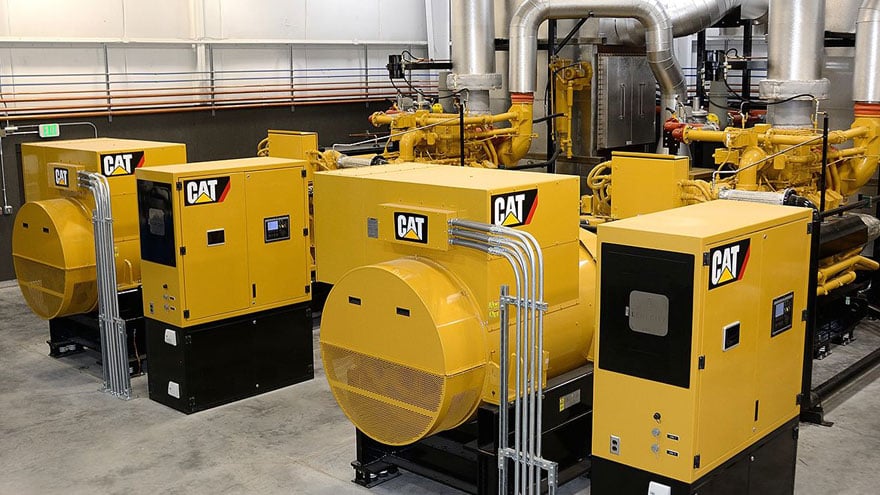
Advancements in generator technology and digital controls are making peak shaving more efficient than ever. Today’s intelligent power systems can sense grid conditions in real time, automatically dispatching generation assets to balance demand. Caterpillar’s modern generator sets, for example, can be integrated with Cat® AMP, its sophisticated energy management software, to predict and respond to peak events with precision.
Peak shaving also contributes to sustainability goals by lowering the carbon footprint associated with grid overproduction and reducing the need for additional fossil-fueled capacity. When paired with renewable energy and battery storage, it becomes a cornerstone of a smarter, cleaner, and more resilient energy strategy.
Avoiding Common Mistakes in Peak Shaving Implementation
While the promise of peak shaving is significant, many utilities fall prey to avoidable pitfalls when deploying a new system, especially when using on-site generation (like diesel or gas generators) or battery systems. Based on multiple industry sources, here are several common mistakes and how to avoid them.
- Underestimating Your Peak Demand Needs
One frequent mistake is underestimating the real peak loads or making an error in the generator/storage capacity. If the system is too small, it won’t adequately shave the demand charge. It’s important to deploy detailed monitoring technologies and analytics (e.g., logging every 15-minute interval) to capture true peak behavior and ensure your asset is sized correctly.
- Poor Planning Around Control Strategy & Integration
Peak-shaving implementation requires a high level of expertise. Mistakes often include weak controls, lack of predictive analytics, or insufficient integration of generation/storage with building loads and grid signals. Use an energy management system that monitors real-time load, forecasts demand and dynamically dispatches generation or storage. Specify clear objectives (cost savings vs. emissions vs. reliability) and define control logic accordingly.
- Ignoring Lifecycle Cost and Fuel/Emissions Impacts
Some deployments focus only on demand-charge reduction, neglecting fuel cost, emissions, maintenance and lifecycle implications of running a generator. While the grid power may be more expensive during peaks, on-site generation isn’t free and may bring added complexity or emissions. To avoid these kinds of mistakes, conduct full ROI analysis including fuel, maintenance, emissions, permitting and long-term operations.
- Overlooking Integration with Storage or Renewables
Relying solely on a generator may miss the full benefit potential of peak shaving when battery/storage or renewables are available. Storage systems offer faster response, lower emissions and often better lifecycle costs. So, build an integrated system with generators, batteries, control logic and renewables to optimize shaving, cost and sustainability.
The Cleveland Brothers Advantage
- Customized Strategy: Tailored solutions that align with operational goals and budgets.
- Comprehensive Integration: Cat® generators, renewables, and energy storage systems work in sync for seamless demand control.
- Local Partnership: Regional service, 24/7 support, rental power, and decades of power generation experience.
- Sustainability Commitment: Cleaner, efficient energy solutions that meet both financial and environmental goals.
In today’s evolving energy landscape, the ability of a utility to control demand costs can make all the difference. With the right strategy and implementation, peak shaving isn’t just a cost-saving measure; it’s a step toward greater reliability, sustainability, and community resilience.
Discover how Cleveland Brothers can help your organization achieve a breakthrough in energy performance.